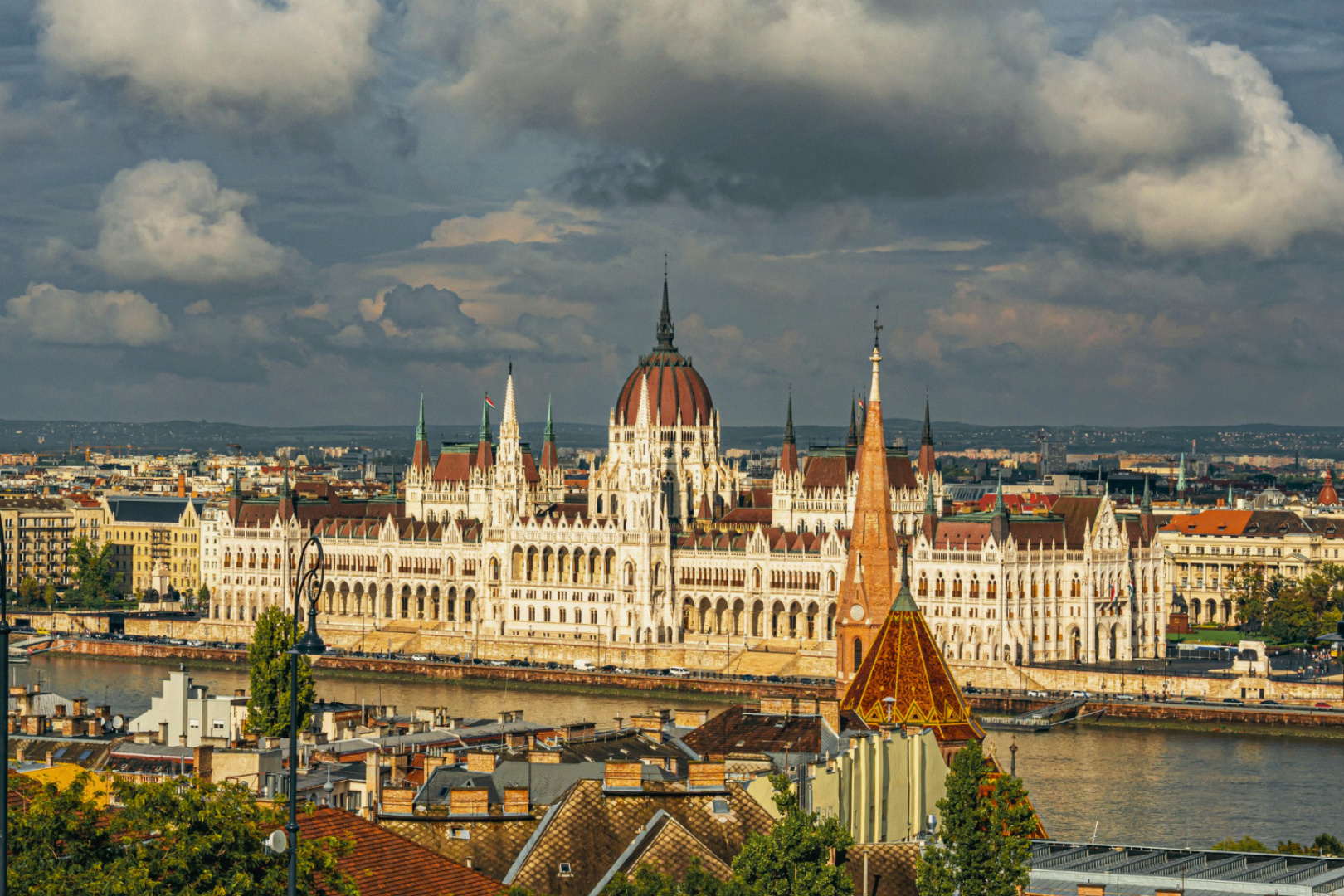
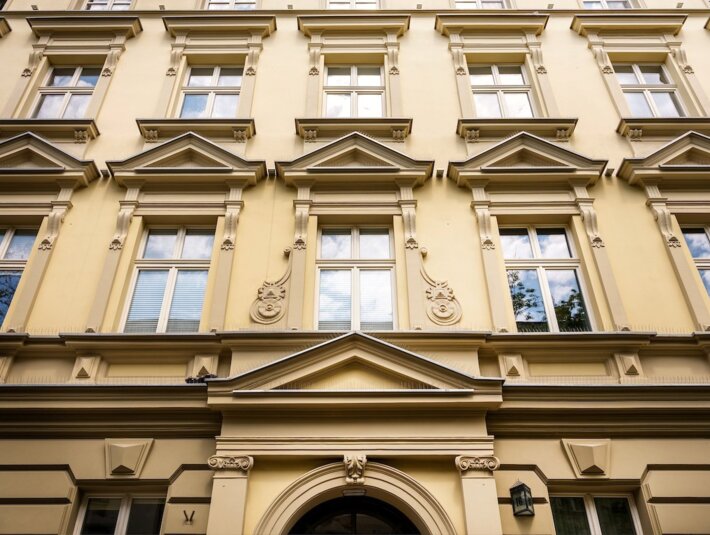
Terézváros post-STR ban: fewer tourists and diners, but apartment prices hold steady

As of 1 January 2026, Terézváros has a regulation setting the number of days private and similar properties may provide short-term accommodation at zero. This does not mean a total ban on all residential accommodation activity—some properties, after meeting additional requirements, were reclassified as guesthouses or collective accommodation facilities.
(source: Hungarian Central Statistical Office – KSH, KSH data on the regulation’s impact in District VI; Telex, on changes to some properties’ business models)
30 percent fewer tourists
The data from Hungary’s Central Statistical Office—KSH—are most revealing.
In May 2026, the number of available beds in Terézváros was 44% lower than a year earlier.
(source: KSH, Tourist arrivals at tourist accommodation establishments – May 2026)
Even more significant is what happened to tourist traffic itself.
From January to May 2026, the number of guests using all tourist accommodation establishments in District VI fell 30% year on year.
(source: KSH, KSH data for Terézváros)
This did not happen during a general collapse in tourism in Budapest.
Quite the opposite.
During the same period, the number of guests across Hungary’s capital rose by 1.4%. Excluding District VI, tourist traffic in the rest of Budapest rose by as much as 7.9%.
(source: KSH, comparison of Terézváros with the rest of Budapest)
In the neighbouring Districts VII and VIII, guest numbers rose by over 10% during this period. KSH itself notes that some demand lost by District VI may have shifted to these neighbouring parts of the city.
(source: KSH, analysis of traffic shifting to neighbouring districts)
This observation is crucial.
Tourists did not leave Budapest; largely, they left one district.
Their spending there fell too, not only on accommodation.
Restaurants and cafés: about 30 percent less turnover
Local food and beverage businesses quickly felt the
In June 2026, Hungary’s food service industry association, Magyar Vendéglátók Ipartestülete, reported that restaurants, cafés and bars operating in District VI recorded an average turnover decline of about 30 percent in the first half of the year.
(source: Turizmus.com, 24.06.2026, “Eltűntek a turisták, bajban vannak a terézvárosi éttermek”)
The association links this situation to significantly fewer tourists staying in the district. Restaurateurs say some businesses are fighting to survive.
(source: Turizmus.com, position of Magyar Vendéglátók Ipartestülete)
It is important to note that the 30% decline in food service turnover comes from industry data and the association’s statement, not from a separate study by Hungary’s statistical office.
Still, it is hard to ignore that the decline reported by restaurateurs is almost identical in scale to the fall in tourist traffic confirmed by KSH: guest numbers fell 30%.
(source on tourist traffic: KSH, official statistical data; source on food service: Turizmus.com, industry association data)
The mechanism is therefore becoming very clear:
fewer beds → fewer tourists in the district → fewer customers for restaurants, cafés, bars, shops and services.
Tourists bring more than accommodation fees
In debates about STR, an apartment is often treated as an isolated business: the owner rents out a flat, the tourist pays for accommodation, and that is where its impact on the city’s economy ends.
In reality, accommodation is only one part of a stay.
Tourists eat breakfast, drink coffee, visit restaurants, shop locally, and use transport, cultural attractions and many other services.
KSH itself confirms tourism’s importance to the economy. According to Hungary’s statistical office, tourism-related sectors—including multiplier effects—accounted for about 10% of Hungary’s gross value added in 2024.
(source: KSH, 16.06.2026, summary of tourism’s economic importance)
Terézváros shows what happens to its service ecosystem when a significant share of tourist accommodation quickly disappears.
KSH data also show that demand was not simply eliminated. Tourist traffic in neighbouring districts rose by over 10%.
(source: KSH, data for January–May 2026)
Some tourists’ spending therefore moved with them.
Apartments? No expected price drop is visible.
This is the Terézváros story's most interesting aspect.
One argument for restricting STR was the expectation that increasing the supply of properties no longer used for tourism would also affect the local property market.
Before the ban, experts quoted by Hungarian media even suggested that the value of flats previously used for STR could fall, as buyers would no longer be willing to pay as much for them.
(source: Telex, 5.09.2024, market analysis before the ban)
Yet no price collapse followed the ban.
Data from property market analytics service SonarHome show that apartment prices in Terézváros were about HUF 1.375 million per m² in August 2025 and about HUF 1.387 million per m² in August 2026. This means prices were essentially stable year on year—even slightly higher, not lower.
(source: SonarHome, apartment price statistics for Budapest VI. Terézváros, monthly price data for District VI)
Moreover, it was about HUF 1.363 million/m² in January 2026 and about HUF 1.387 million/m² in August. Thus, no sharp apartment-value fall is visible while the new rules were in force.
(source: SonarHome, monthly 2026 data for Terézváros)
These figures come from a commercial analytics service and should not be presented as a complete statistic of all district property transaction prices.
But they raise a crucial question.
If one expected result of such radical STR intervention was to improve housing availability by changing the property market, then after eight months no significant fall in apartment prices is visible.
Other effects are already clear:
–44% accommodation beds,
–30% tourists,
about –30% turnover reported by food services,
with no comparable fall in apartment prices.
(sources: accommodation beds/guests—KSH, official KSH data; food service turnover—Turizmus.com/Magyar Vendéglátók Ipartestülete, food service data; apartment prices—SonarHome, housing market data)
Did the ban make young families move into the city centre?
So far, no available data confirm this.
There are currently no demographic statistics showing that former tourist apartments have been taken over en masse by young families, new permanent residents or people who were able to move into central Budapest because of the regulation.
It would therefore be unfair to claim either that all such apartments are now empty or that they have been taken over en masse by permanent residents.
Look instead at the problem's much broader scale.
According to 2022 census data, 32% of apartments in District VI were classified as unoccupied, meaning that of approximately 29,000 units, only about 20,000 were permanently occupied. Around 9,000 therefore belonged to the broad category of unoccupied dwellings, while about 2,700 units were being used for STR at the time.
(source: Telex, based on 2022 census data, “Tizedével nőhet a budapesti albérletkínálat...”)
The category “unoccupied” does not, of course, mean that all these apartments are physically empty. The statistics also include units used periodically, as second homes, offices, consulting rooms or, indeed, some tourist properties.
(source: Telex/G7—explanation of census data on unoccupied dwellings, census data analysis)
However, this is extremely important:
the problem of dwellings not used as primary residences was much bigger in Terézváros than the STR sector itself.
So eliminating one form of property use does not automatically mean all these units become homes for local families.
So what did the ban actually achieve?
Assessing its long-term effects responsibly will take time. The regulation has been in force only since 1 January 2026.
(source: KSH information on the regulation taking effect)
But the first months already provide very interesting evidence.
On one hand, no clear drop in housing prices.
On the other, concrete, measurable effects on local tourism and economy:
44% fewer available beds and 30% fewer tourist arrivals in the first months under the new rules.
(source: KSH official data for 2026)
In addition, the local hospitality industry reports around a 30% drop in turnover for restaurants, cafés and bars.
(source: Turizmus.com / Magyar Vendéglátók Ipartestülete information dated 24 June 2026)
Also tourist count rose > 10% in neighbouring districts.
(KSH Budapest district comparison)
So one may ask:
was the problem really solved, or were tourists, their accommodation and their spending mainly shifted a few streets away?
For Budapest as a whole, this may seem a minor difference.
For the owner of a restaurant, café, small shop or service business in Terézváros, however, it is fundamental.
Because their customer did not move their spending from a tourist apartment to a family home.
Their customer simply stays—and spends money—in a neighbouring district.
A city is an interconnected system
The debate on short-term rentals is often reduced to a simple conflict: tourist or resident.
But cities do not work that way.
Housing, tourism, hospitality, retail, culture, transport, services and jobs are parts of one system.
Terézváros is now a fascinating European laboratory showing the consequences of radically interfering with just one element of that system.
After the first months, we can say that the expected drop in housing prices is not visible. Available market data indicate a level close to last year's.
(source: SonarHome housing prices Budapest VI. Terézváros)
The drop in tourist traffic and problems reported by local hospitality businesses are already very clear.
(source: KSH tourism data; Turizmus.com hospitality data)
We don't yet know the situation in two or five years.
But that is precisely why Budapest's experience deserves close attention before similar solutions are presented as a simple recipe for other European cities.
Regulating short-term rentals may be necessary. But the question is not: “regulate or not?”.
The question is:
How regulate markets without fixing one problem, creating several more?
Perspektywa właścicielki, inwestorki i ekspertki rynku nieruchomości.