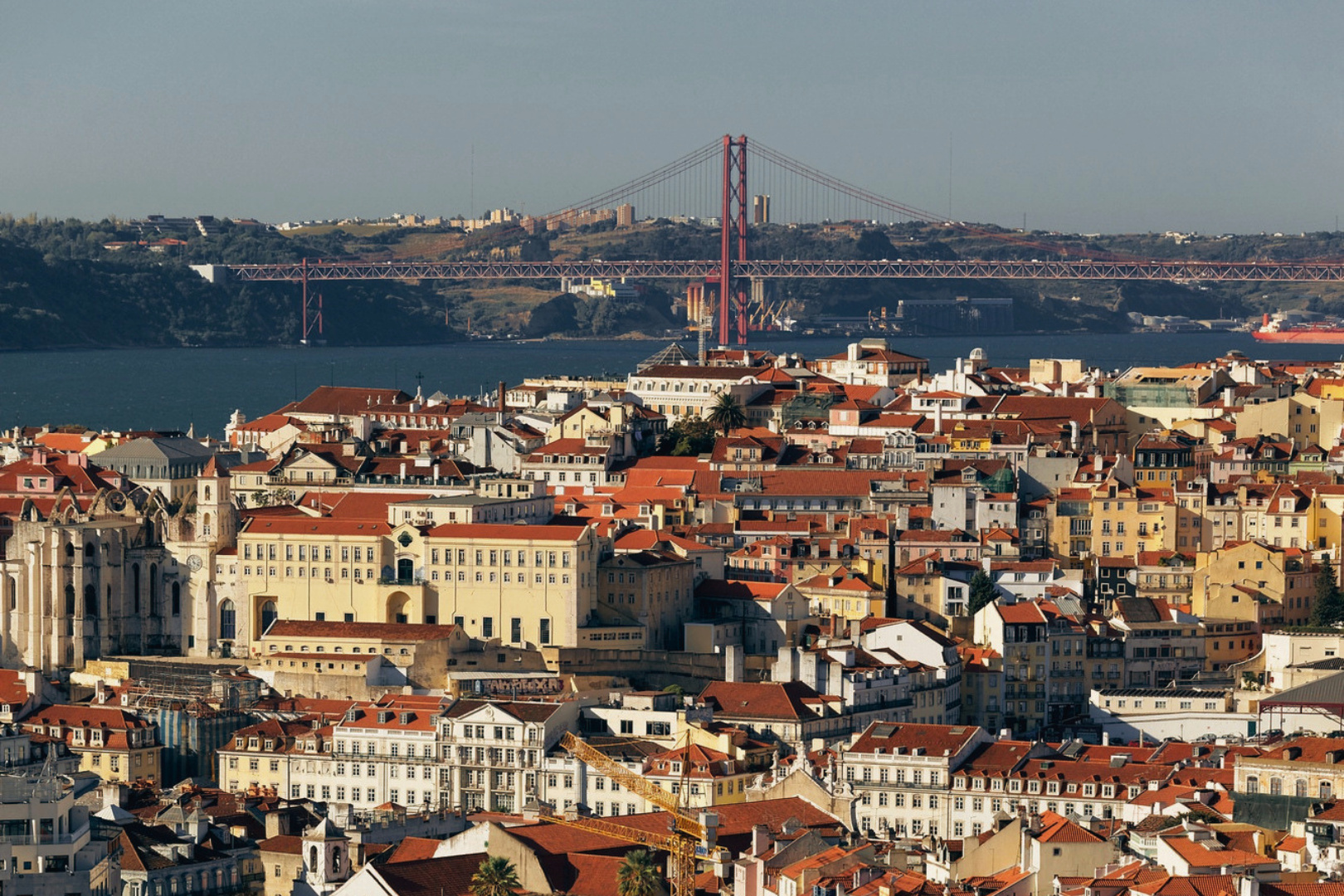
Less investment, less revitalization. Will Krakow repeat Lisbon's lesson?

For years, the debate on short-term rentals in European cities was reduced to a simple equation: fewer tourist apartments = more homes for residents.
But a city is not a one-variable equation.
A property can be a home, tourist apartment, office, hotel or service premises. But it can also remain an empty, unrestored building for the next dozen years because none of these uses makes renovation economically viable.
And this last scenario should particularly concern Kraków.
Lisbon restricted STR. Then it counted investments
Portugal gives us something extremely valuable today: a way to assess regulations not only through their stated aims, but through real data.
In April 2026, Portugal's Direção-Geral da Economia published the study “Restrições ao Alojamento Local em Lisboa: Efeitos na Construção e Reabilitação Urbana”.
This is not an analysis by an organisation representing Airbnb or an apartment owners' association. The author used Lisbon administrative data from 2009–2024 and quasi-experimental difference-in-differences and synthetic difference-in-differences methods to estimate how restrictions on Alojamento Local—the Portuguese equivalent of STR—affected investment activity.
It used permits for, among other things, construction, rebuilding, extending, altering, maintaining and demolishing properties.
The result?
In districts covered by 2018's first restriction wave, permit applications fell an average of about 20.7 per year versus districts not then regulated.
The author's alternative method—synthetic difference-in-differences—found an even larger effect for the first restricted group: about 35 fewer applications per year.
The author notes that the effect varied over time and was weaker in later stages of the regulation's expansion. It is therefore not justified to claim that every STR restriction automatically causes the same fall in investment.
Initial effect direction was statistically significant.
Source: Direção-Geral da Economia, Restrições ao Alojamento Local em Lisboa: Efeitos na Construção e Reabilitação Urbana, 2026.
Why can allowing STR finance building renovations?
The mechanism described by the Portuguese researcher is actually very simple.
Old-building renewal is an investment.
The higher the renovation cost, the more important the question of how the property can be used and generate income in future.
The author of the Portuguese study notes that the option of using a renovated property for Alojamento Local can increase the economic appeal of modernising it. Limiting possible uses may reduce the expected return and, consequently, the owner's or investor's willingness to bear renovation costs.
This matters especially in historic city centres.
We are not talking only about finished, newly renovated flats that can be put on the long-term rental market the next day.
We also mean rear buildings without lifts, neglected tenements, buildings needing new installations, roofs, floors and staircases, properties with ownership problems, and listed buildings whose renovation often requires huge expenditure.
Capital does not appear there for a building's beauty.
It appears when someone sees an economic reason to save it.
But what Lisbon itself did next is most interesting
In December 2025, Lisbon adopted new rules on Alojamento Local.
The city did not lift the restrictions. On the contrary—it still designates areas where new AL properties are restricted according to their share of the housing stock.
But the new rules contain an extremely interesting exception.
Even in restricted areas, Lisbon kept the option of granting exceptional new Alojamento Local permits when the investment concerns:
“reabilitação de edifícios em ruínas”—the rehabilitation of buildings in ruins,
or
“reabilitação integral de edifícios totalmente devolutos há mais de três anos”—the full rehabilitation of buildings entirely vacant for over three years.
This provision appears in the city's official regulation published in Portugal's Diário da República on 5 December 2025.
Moreover, in the regulation's justification, Lisbon authorities explicitly write that Alojamento Local plays an important role in the city's economy not only by generating turnover and household income, but also through its “efeito dinamizador da reabilitação urbana e da economia local”—its stimulating effect on urban regeneration and the local economy.
This is an extremely important sentence.
Because the STR industry did not say it.
Lisbon wrote it in its own STR-regulating act.
Now let us bring this experiment to Kraków
Imagine the Old Town, Kazimierz and Stradom ten years from now.
We restrict short-term rentals, assuming that the units freed up will automatically return to the housing market.
Some probably will.
But what will happen to buildings still awaiting renovation?
What about tenements that need all their installations replaced?
What about rear buildings?
What about properties requiring millions in conservation work?
What about buildings whose layout, location, lack of lift, small floor areas or conservation restrictions make conversion into modern family homes economically difficult?
Will they really all become affordable homes for Kraków families?
Or will some simply wait another decade for renovation?
Kraków already faces a problem that cannot be ignored
Official Kraków revitalization documents have for years cited poor building conditions and declining populations in central areas.
Dec 2025: Kraków City Council's new Municipal Revitalization Program covers, incl., Kazimierz and Stradom.
As recently as April 2026, during a Culture and Heritage Committee meeting on Kazimierz tenements, councillors warned that years without renovation could lead to historic buildings deteriorating.
An important reminder: a vacant property is not a neutral state.
A heritage building without investment won't wait
It deteriorates.
Tourism is part of central Kraków’s economic ecosystem
In 2024, Kraków welcomed 14.72 million visitors, whose estimated spending in the city totalled around PLN 9.05 billion.
According to city data, around 7.95 million visitors were tourists, meaning people staying in Kraków for at least one night.
Foreign tourists are especially important. In 2024, they spent around PLN 1,174 per person during their stay, excluding some pre-arrival spending.
This money does not end its journey at an apartment or hotel.
It goes to restaurants, cafés, shops, museums, guides, transport companies, laundries, technical services and hundreds of other businesses.
But some of this capital also reaches the properties
Over the past dozen years, tourism has created an economic rationale for renovating some buildings in Kraków’s historic centre.
This does not mean every revitalization was funded by tourism, or that STR growth caused no social costs. It did, which is why sensible regulation is needed.
But when designing regulations, we cannot count only the homes we might potentially “recover” and forget investments we may no longer see.
The biggest mistake would be assuming every STR will become housing after a ban
Properties do not make decisions.
Their owners and investors do.
If an investment worth several or a dozen million złoty no longer makes economic sense under one use, the investor need not choose another.
They can choose a third option:
not invest.
This is an element of the debate we practically do not have in Poland.
We ask: homes “back on market”—how many?
Far less often, we ask:
how many buildings will not be renovated?
Lisbon offers Kraków a warning, not a ready-made answer
I am not claiming Kraków is Lisbon.
Nor am I claiming that limiting STR in Kraków will cause exactly the same investment decline observed in Portuguese data.
That claim cannot honestly be made today.
But we already have empirical evidence from a major historic European city where, after limits on creating new STR, investment activity, measured by applications for building-work permits, declined, and a study using administrative data and quasi-experimental methods found a causal link.
We also have that same city, whose latest regulations deliberately allow new STR in restricted areas when the project involves saving a ruin or bringing back to life a building vacant for over three years.
Perhaps this offers one of Kraków’s most important lessons.
Regulation need not mean choosing between “anything goes” and “ban everything”.
STR concentration can be limited where it genuinely causes housing problems, while creating mechanisms for tourism to fund the revitalization of properties that might otherwise remain empty.
Because central Kraków buildings still stand, awaiting their turn.
Some for years.
And before creating rules meant to recover homes, we should carefully check that we do not also remove the economic rationale for recovering entire buildings.
Sources
Direção-Geral da Economia, Portugal (2026) – Restrições ao Alojamento Local em Lisboa: Efeitos na Construção e Reabilitação Urbana. Administrative data 2009–2024, DiD and SDiD analysis.
Diário da República / Municipality of Lisbon (5.12.2025) – Notice No. 29926-A/2025/2, amendment to the Municipal Local Accommodation Regulation. Lisbon’s official legal act, including exceptions for revitalizing ruins and buildings vacant for over three years.
Kraków City Hall / Małopolska Tourist Organization – data on tourism in Kraków in 2024: 14.72 million visitors and estimated visitor spending of approx. PLN 9.05 billion.
Municipality of Kraków (2025) – Municipal Revitalization Program: Kraków, incl. Kazimierz and Stradom.
Perspektywa właścicielki, inwestorki i ekspertki rynku nieruchomości.