Short-term rentals need solid rules, not simplifications. TYZENHAUZ's voice in the debate on new regulations

autor: Karolina Kwapińska Pietruska
współwłaścicielka TYZENHAUZ S.C. wiceprezes TYZENHAUZ HOTELS Sp. z o.o.
The debate over short-term rentals in Poland has entered a crucial stage. On 2 September 2026, the Council of Ministers adopted amendments drafted by the government to the bill on hotel services and short-term rentals, and the bill with these amendments passed its first reading in the Sejm. The proposals include creating a Central Register of Tourist Accommodation Facilities and giving homeowners’ associations, cooperatives and local authorities greater influence over short-term accommodation services. (Gov.pl)
This is still a legislative process. That is why a substantive discussion is now needed on how to create laws that improve residents’ safety and comfort, limit the grey market, and at the same time do not harm entities that have operated legally for years, invested, employed people and taken responsibility for their properties.
We do not defend a lawless market
TYZENHAUZ does not oppose regulating short-term rentals. On the contrary, the professional part of the industry has long needed clear, equal and enforceable rules.
We support a mandatory property register and solutions limiting the grey market. We support easy identification of who is responsible for each property. Guests should know whom they buy from; residents whom to call about problems; state and local authorities who operates a business and under what rules.
A transparent, professionally managed property has an operator, contact details, house rules, procedures, insurance and response personnel. This is fundamentally different
from an anonymous property operating outside the system, whose host is hard to find precisely when a problem arises.
That is why the question should not be: “regulate or not?” It should be: “how can we regulate to genuinely improve how the city functions?”
A professional operator is not an anonymous online apartment
Today’s debate puts very different models under the single heading “short-term rental”: a single apartment rented occasionally, a property operating outside the register, a professionally managed apartment, an aparthotel, or a company employing dozens of people with a reception desk, reservations department, accounting, technical services and emergency response procedures.
These are not the same phenomena.
TYZENHAUZ has operated in this market for over a decade. It is neither a random nor a sideline business for its founders.
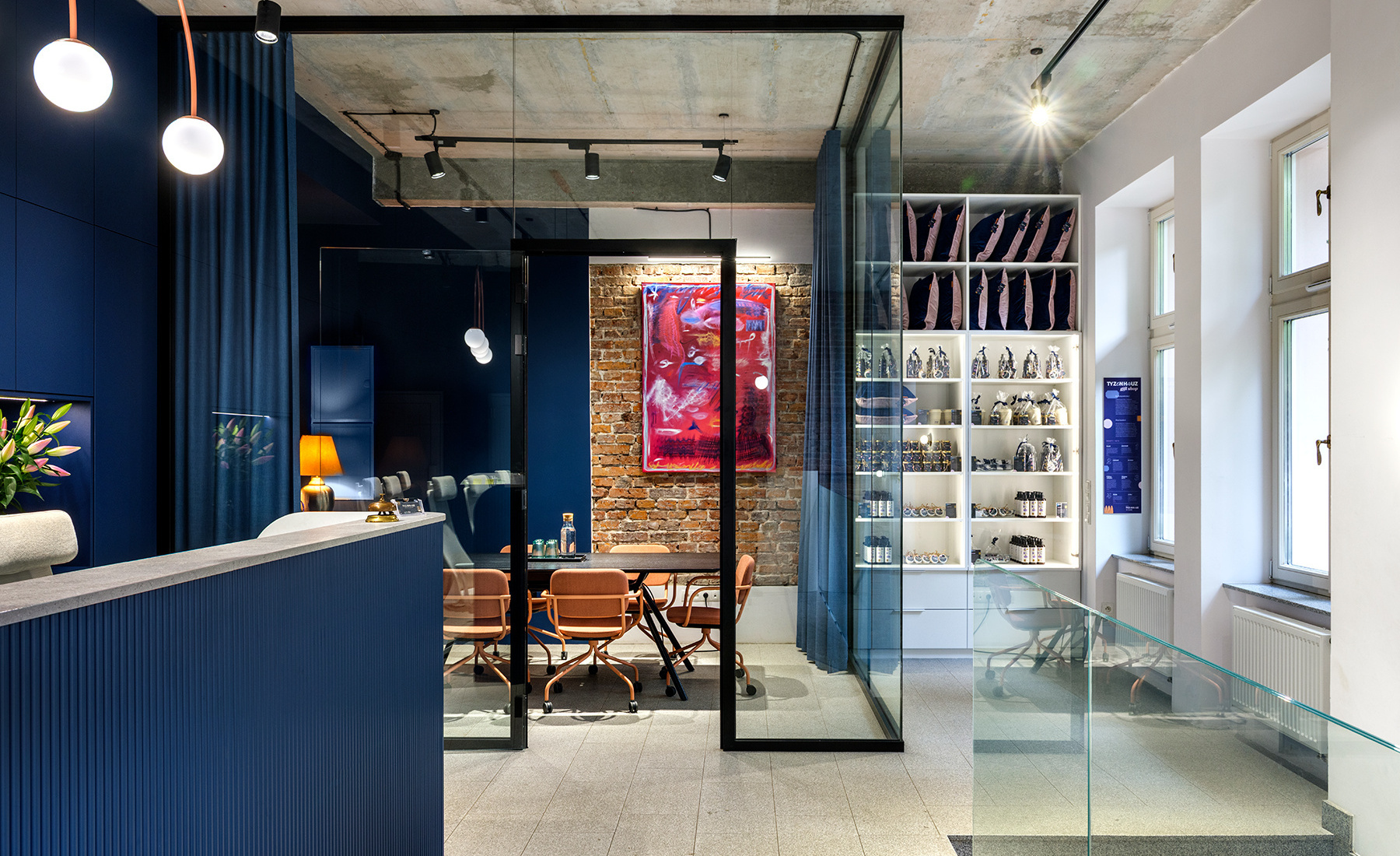
Today, a team of around 30 comprises receptionists, property managers, reservation, accounting, sales and marketing staff, technical service personnel and apartment-preparation teams. For them, this is not occasional work. It is a profession, experience and career built over years.
Likewise, as TYZENHAUZ’s founders, we do not see it as an experiment or additional investment. Over the years, we have invested in people, technology, procedures, service quality, equipment and development—in accordance with the law and respecting those with and for whom we work.
Throughout our history, we have not observed the systemic problems that parts of the online debate have begun to present almost as the definition of short-term rentals: constant parties, chronic neighbour conflicts or complete operator anonymity.
Of course, when serving thousands of people, no one can guarantee that a problem will never occur. The difference is what happens when one does. A professional operator answers the phone, knows who made the booking, and has rules, staff and procedures. They can respond, draw consequences and help residents.
Residents’ peace and quiet matters to us too
We do not downplay residents’ genuine nuisance-property experiences. Residents have the right to sleep at night and expect that their
stairwell will not become a party venue. They have the right to know whom to call in case of flooding, a disturbance or breach of the peace.
These demands do not conflict with a professional operator’s
That is why, among other things, the industry calls for measures limiting guest anonymity, greater responsibility by the booking person for the entire group’s conduct, more effective operator-authority cooperation, 24-hour emergency contact for residents, and excessive-noise detection systems—without recording conversations or violating privacy.
There is no reason to protect a property that persistently causes problems simply because it operates as short-term accommodation. But it is equally difficult to justify closing a well-run property merely because someone elsewhere runs a similar business badly.
Responsibility should follow conduct.
Many more people stand behind an apartment than are visible
A guest’s stay involves more than just the apartment operator. It involves a laundry preparing linen, a cleaning company, a technician, taxi driver, restaurant, café, guide, transport company, equipment suppliers, photographer, graphic designer, carpenter, plumber, electrician and courier.
Over the years, a local economic ecosystem has grown around TYZENHAUZ. We work with many small and larger businesses that, together with us, serve tourist traffic. Money spent by guests does not stop at accommodation. It circulates throughout the city.
That is why the picture of a debate with “residents” on one side and anonymous “business” on the other is false. The receptionist is a resident of this city. So is the cleaner. So are the laundry owner, driver, chef, accountant, technician, guide and restaurant manager.
They are parents, employees and entrepreneurs. Their lives also depend on the decisions being made today.
It is precisely this group—people working in laundries, food service, cleaning, maintenance and deliveries—that monitoring submitted by the Polish Short-Term Rental Association identifies as almost absent from the current public debate, despite being the real backbone of the entire market.
Our investors are primarily private individuals
A similar oversimplification concerns property owners. It is easy to portray anonymous capital buying apartments, earning from tourists and then taking the money out of the city or Poland.
Meanwhile, most of the owners we work with are private individuals, not foreign holdings or anonymous investment funds.
For some, an apartment is part of their family’s financial security. Property income helps repay a mortgage on their own home—sometimes a slightly larger one, with an extra bedroom for a child, parking space or small garden, simply making daily life more comfortable. Much of the money earned returns to the local economy: to banks, shops, service providers, renovation teams and ordinary family expenses.
Some owners also need to use their apartment in Kraków from time to time. They visit several times a year and prefer staying in their own property rather than a hotel. However, they do not want it to stand empty, incur costs and remain unattended during the other months. Professional short-term rental meets these needs: the property remains available to the owner and, when unused, covers its costs and is regularly cleaned, inspected and maintained in good condition.
Others own family apartments passed down through generations. They do not currently need to live in them, but feel emotionally attached to them and do not want to let them to a long-term tenant for years, losing the freedom to use the family property. Professional management allows them to keep the apartment in the family, maintain it well and cover its operating costs at the same time.
Owners are not a uniform group either. They cannot all be reduced to the stereotype of an investment fund or speculator.
The city’s strong accommodation base is built on diverse lodging forms
Hotels, aparthotels, professionally managed apartments and other legally operating properties together form Kraków’s accommodation base. Its size, diversity and quality are among the factors determining the city’s ability to compete for major international congresses, conferences, symposia and business events.
This is particularly important in the MICE segment—Meetings, Incentives, Conferences and Exhibitions. The International Congress and Convention Association (ICCA) is one of the world’s key reference points for the international association meetings market. In 2025, Kraków hosted 44 meetings meeting ICCA criteria, ranking the city 31st in Europe. Kraków remains Poland’s second most important centre for this market. (Kraków Convention Bureau)
This position is not guaranteed forever. Competition among European destinations is growing, and for major events the entire city ecosystem matters: conference infrastructure, transport, services and the ability to accommodate enough participants.
This is precisely where the interests of professional apartment operators and hoteliers clearly converge.
If a major international congress does not choose Kraków because the city as a whole cannot provide sufficient infrastructure and accommodation, a hotel will not “take” the guest from an apartment.
That guest simply will not be in Kraków.
They will not rent a hotel room. They will not book a conference room. They will not dine here, take a taxi, visit a museum or go shopping.
That is why the hoteliers we speak to recognise the importance of a large, legal and diverse accommodation base for Kraków’s overall competitiveness. In many areas, our interests are shared: first, we must ensure that a major event chooses our city at all.
Tourism is a real part of Kraków’s economy. The figures best show this system’s scale.
In 2025, 16.25 million people visited Kraków, spending around PLN 15.4 billion. This is not, of course, money flowing directly into the city budget. It is money left in the local economy—in accommodation, food service, transport, culture, retail and services. (Kraków)
This turnover nevertheless creates jobs, wages, taxes and fees.
The latest data on visitor spending show tourism’s economic importance to Kraków. In 2025, 16.25 million people visited Kraków, leaving around PLN 15.4 billion during their stay—over 70% more than the previous year. For comparison, visitors spent around PLN 9.05 billion in 2024. Tourism thus supports a broad local economic ecosystem—from accommodation and food service to transport, retail, culture and services.
These figures show the mechanism’s scale: tourism is not an addition to Kraków’s economy, but one of its important
Therefore, a significant and sudden reduction in the legal accommodation base could have consequences far wider than lost revenue for apartment operators. It could affect hoteliers, the MICE sector, gastronomy, transport, local jobs, tax revenues and the city’s competitiveness in the international events market.
It’s all interconnected.
Regulation should solve problems, not create new ones
We understand the need to give residents and local authorities real tools to respond where the scale of short-term rentals genuinely disrupts local communities. But the tool should be proportionate to the problem.
An apartment repeatedly generating disputes and requiring intervention is one thing; a professionally managed property with no such problems is another. A part of the city where short-term accommodation genuinely causes serious tensions is different from a place where it is just one of many elements of the urban fabric.
Therefore, local restrictions should be based on data, clear criteria and an analysis of the problem’s actual scale. New safety or fire-protection requirements should be precise and introduced with a sufficiently long adjustment period. The law should also consider businesses and owners who have operated legally for years, signed long-term contracts and invested significant funds under the applicable rules.
The state may change the rules. Businesses may expect such changes to be proportionate and predictable.
The world isn’t black and white
Short-term rentals have become highly emotional. The internet easily turns complex problems into a simple story of good versus evil.
Reality is more complicated.
We understand residents' anger when guests in a neighboring apartment genuinely prevent sleep. They should know who is responsible, call a specific number, and trust a professional operator to respond.
But we also ask you to see the bigger picture.
Not every apartment is a party venue. Not every business tries to evade the law. Not every owner is an investment fund. Not every operator is anonymous.
Behind this market are receptionists, cleaners, managers, accountants, drivers, cooks, guides, technicians, small-business owners, investors and their families. These are people who have built their businesses, skills and jobs over many years.
As TYZENHAUZ, we are ready for regulation, registration, transparency, oversight and accountability. We are ready to talk with residents, hoteliers, local authorities and lawmakers.
We are not asking to operate without rules.
We ask for good rules—ones that distinguish responsible businesses from the grey market, an incident from a systemic problem, and one nuisance property from the entire industry.
The market can be organised and improved without weakening an element of the economy Kraków has built over decades.
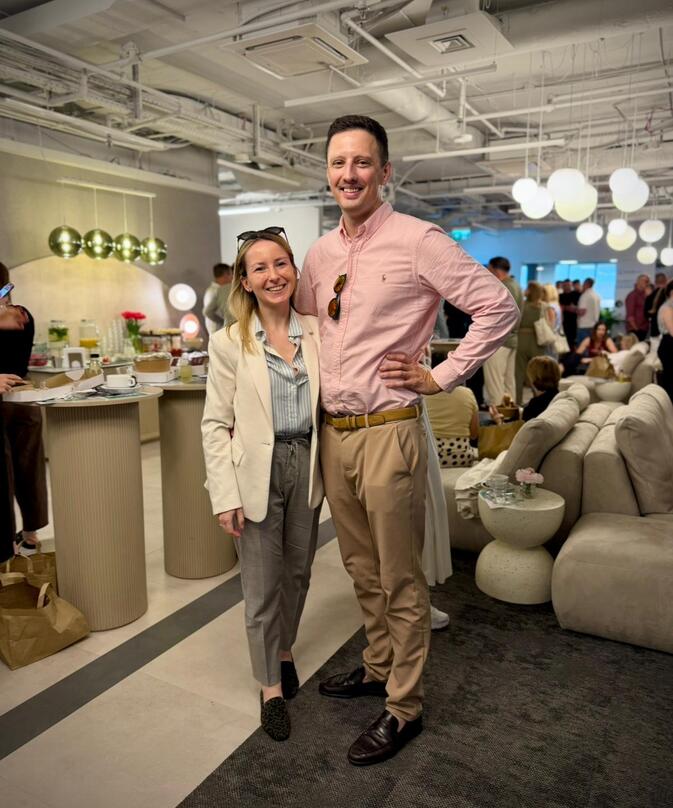
Karolina Kwapińska-Pietruska i Andrzej Pietruski – właściciele TYZENHAUZ. Od ponad dekady rozwijają w Krakowie odpowiedzialny model zarządzania apartamentami.